

In this 2018 interview, Mike Semanoff talks with professional hunting guide Tyrell Gray about the problems that can turn a remote hunt into an uncomfortable or dangerous experience. Tyrell draws on guiding in Alaska, Colorado, Wyoming, and Utah, combining equipment observations with stories that changed his attitude toward risk.
His central theme is preparation that matches the trip. Durable equipment matters, but so do fit, physical readiness, realistic expectations, and conservative judgment. These are personal experiences and opinions from the original conversation, rather than a current product test or a statistical ranking of outdoor hazards.
Equipment failures and physical preparation
Tyrell Gray’s answer is surprisingly ordinary: backpacks. In this part of the conversation, he describes clients investing heavily in a remote hunt but arriving with a pack that is not up to the work. For him, reliability and fit deserve as much attention as the more exciting items in a hunting kit.
A broken frame at the start of a long trip
Tyrell recalls a sheep hunt when a client’s pack frame broke about six miles from the trailhead. The failure forced an immediate choice between losing time to a return trip and continuing with an improvised repair. In his account, the client then endured an uncomfortable pack for the remainder of the hunt.
The example is one guide’s experience with one pack, not a measured failure rate for a brand. Its value is in showing the consequences: a seemingly modest equipment problem can affect many days of a remote trip.
Rainwear is another priority
He also singles out rain gear, drawing on his experience guiding in wet Alaskan conditions. His concern is whether equipment suits the environment in which it will be used, rather than whether it looked adequate before departure.
Preparation includes the person
The discussion then moves beyond equipment. Tyrell argues that physical preparation deserves serious attention too, describing clients whose conditioning limited what they could do once in the field. A paid trip and an expensive kit do not remove the demands of the terrain.
Ethical restraint and recovery responsibility
No interview can guarantee that an animal will never be lost. Tyrell Gray’s actual message is about ethical restraint before a shot and the responsibility to make a serious recovery effort afterward.
Excitement should not make the decision
Tyrell describes how anticipation can lead hunters to accept an opportunity they are not truly comfortable with. He sees part of a guide’s role as providing a calm second judgment when a client is excited.
He also distinguishes enthusiasm for long-range target shooting from the decisions involved in hunting. The conversation emphasizes recognizing personal limits and avoiding an attempt simply because an opportunity may disappear.
A story about stopping the search too soon
Tyrell recounts joining a search after another party had been unable to locate a wounded bear. In his account, continuing the search led to finding the animal nearby. He uses that experience to explain his frustration with giving up prematurely.
The story supports his point about responsibility, but it is not a universal search method or a reason to enter dangerous terrain. Elsewhere in the same interview, he stresses that human safety comes first.
Read together, those themes are more useful than an absolute guarantee: avoid letting excitement override judgment, take the consequences seriously, and keep safety central to the decisions that follow.
How his thinking about caliber changed
The question in this discussion asks Tyrell Gray to choose a single hunting caliber. His answer focuses on how his thinking changed over years of guiding: he moved away from assuming that the largest option was automatically the best answer.
Comfort and confidence shape his view
Tyrell recalls clients who were uncomfortable with the recoil of their rifles. Those experiences led him to emphasize familiarity and confidence rather than impressive specifications alone. He describes his own preference in the video, but the reasoning behind it is more important than the name of a cartridge.
His examples are stories from particular hunts. They do not establish that the same cartridge is suitable for every species, location, or circumstance, and the clip does not provide a comprehensive comparison of hunting ammunition.
Why the answer depends on the individual
The discussion points toward individual limitations and responsible judgment. Tyrell’s view is that more power cannot compensate for a hunter being uncomfortable with the equipment.
The interview also touches on ethical restraint, a theme developed more fully in the related recovery discussion. This is a summary of his 2018 perspective, rather than current legal guidance or an all-purpose cartridge recommendation.
Kit weight, durability, and carrying comfort
Tyrell Gray approaches hunting-kit weight as a balance between carrying comfort, dependable equipment, and the physical demands of the trip. He does not try to make every item as light as possible.
Some weight earns its place
His own backpack illustrates the compromise. Tyrell describes it as heavy but durable, and accepts that weight because carrying substantial loads is part of his guiding work. A pack failure in the backcountry would create a bigger problem than carrying a little more from the start.
Elsewhere in the kit, he sees opportunities to reduce weight through clothing and equipment choices. He contrasts the heavy rifle he uses for target shooting with what he is willing to carry on a hunt. Different roles justify different priorities.
A personal benchmark, not a universal limit
In the video, Tyrell mentions roughly 45 pounds as a benchmark from his experience and recalls a trip with a heavier load that became uncomfortable. That figure is his rule of thumb, not a safe carrying limit for every person, route, or duration.
He repeatedly returns to physical preparation. Equipment weight cannot be evaluated separately from the person carrying it. His story about an exhausted client abandoning a rifle is an extreme illustration of the mismatch between expectations and the effort a trip can demand.
The useful theme is balance: saving weight has value, but so do fit, durability, and an honest view of the trip’s demands.
Close calls that changed his perspective
In this part of the conversation, Tyrell Gray recounts two frightening experiences from his guiding career. One involves a close encounter with a wounded grizzly; the other involves a snowmobile accident during a blizzard. Together, they explain why his view of acceptable risk changed with experience.
An encounter in thick cover
Tyrell describes a bear encounter that unfolded quickly and left him shaken. The story conveys how little time there may be to react when visibility is limited and an animal’s condition is uncertain. It is a recollection of a particular incident, rather than a recommended response to a bear encounter.
An accident followed by a long wait
The experience he describes as his most serious began when he drove off a cliff in poor visibility and badly injured his leg. He recalls waiting hours to reach camp and then days before he could be evacuated.
The delay is an important part of the story: in a remote place, the consequences of an accident extend beyond the initial injury. Weather and access can affect what happens afterward.
Experience should change judgment
Looking back, Tyrell says he took risks when younger that he would not take again. He encourages attention to a guide’s experience in the area and attitude toward client safety. The value of these stories is that reflection, rather than the drama of the encounters themselves.
Judgment and backcountry risk
Asked whether weather or animals are the greater danger on a remote hunt, Tyrell Gray focuses on the decisions people make when they are excited or invested in the outcome. His answer is a guide’s interpretation of incidents he has witnessed, not a statistical ranking of causes of death.
When a rare opportunity changes normal judgment
Tyrell describes how the pressure of a once-in-a-lifetime hunt can lead someone to accept a risk they would reject on an ordinary hike. The desire to reach or recover an animal can narrow attention until terrain and personal limits receive too little weight.
He recounts a fatal fall involving a hunter who attempted to recover a mountain goat from a steep face. The point of the story is the decision to enter terrain the person was not prepared for, rather than a set of techniques for crossing it.
Success includes returning safely
Weather still matters in Tyrell’s account, particularly in remote areas where travel and evacuation depend on conditions. His emphasis is that enthusiasm should not overrule concerns about the situation.
He connects that principle to the responsibilities of a guide and to looking after family members outdoors. The interview’s central message is that returning home safely matters more than completing the hunt. It does not replace local expertise, trip-specific planning, or emergency guidance.
Personal gear: fit before imitation
Tyrell Gray opens this equipment discussion with a qualification: different bodies fit different gear. The pack or boot that works for him is an example of a successful personal fit, not a promise that it will work equally well for someone else.
A pack built around his work
Tyrell shows a Mystery Ranch pack that he says has lasted through five guiding seasons. He values its ability to compress for smaller loads and expand for bulky ones, along with its adjustable fit. Durability matters enough in his work that he accepts a heavier pack rather than treating minimum weight as the only goal.
Footwear and trekking poles
He describes trekking poles as particularly useful to him when carrying heavy loads, emphasizing his experience of balance and support. His footwear discussion follows the same personal-fit theme: he shows boots that suit his feet and the terrain he works in, and describes their condition after two seasons.
Those are firsthand durability impressions, not standardized comparisons between brands. His larger point is to become familiar with how gear fits before depending on it during a remote trip.
Rainwear must match the environment
Tyrell also discusses rain gear, including the ventilation features he appreciates. A story about clients arriving in clothing poorly suited to Alaska reinforces his conclusion: preparation needs to reflect the destination, not just conditions at home. The products shown are those he used at the time of the interview.
Across the interview, Tyrell returns to the same priority: a successful trip includes getting everyone home safely. The gear walkthrough is most useful in that context—as an explanation of what has worked for him and why.
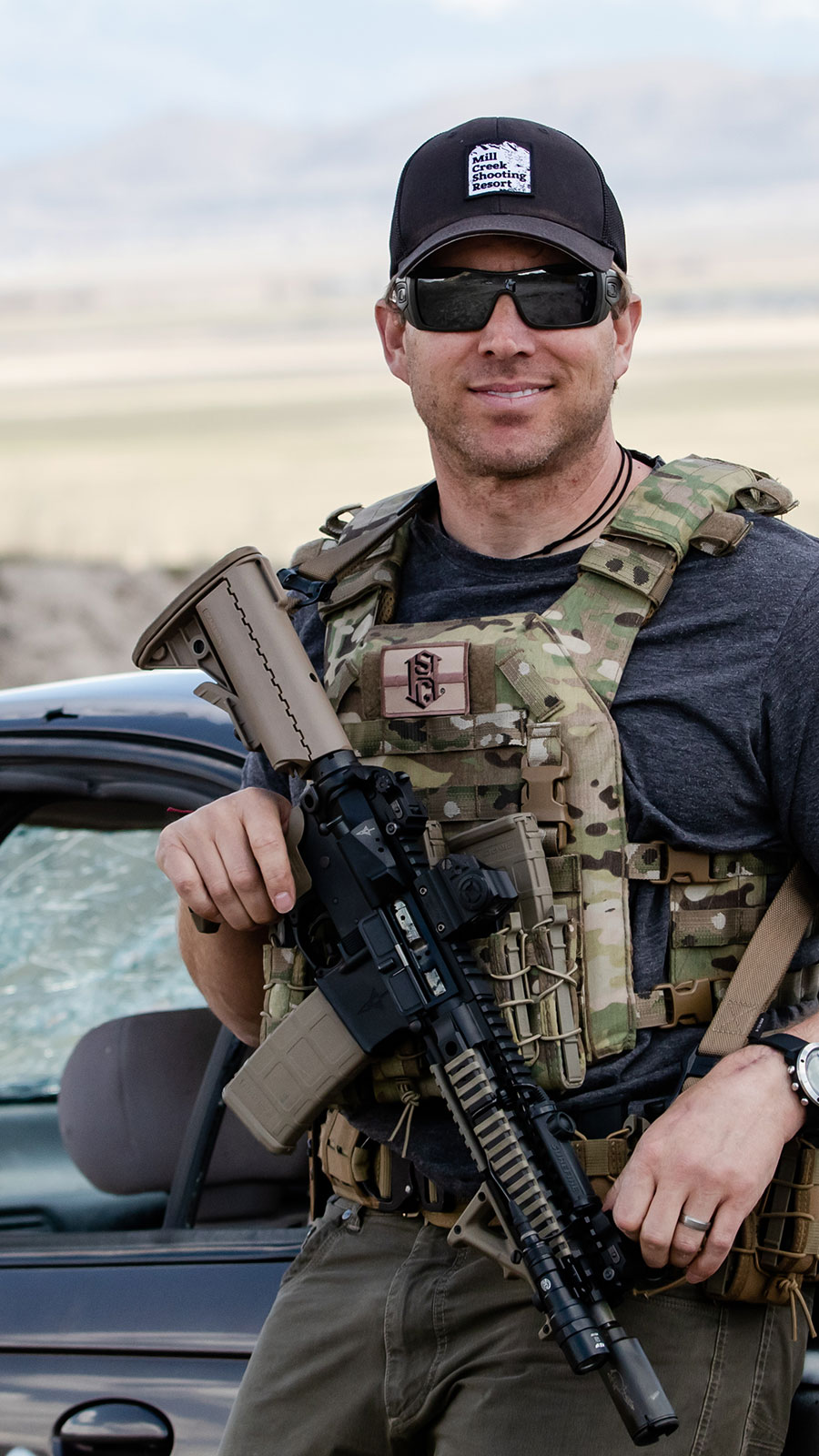
Mike Semanoff is the writer behind Shooter Opinions, sharing firsthand firearm and outdoor gear reviews, hunting experiences, range reports, and industry interviews. A U.S. Army veteran who served in the 82nd Airborne Division, Mike draws on military experience and time in the field to discuss performance, comfort, durability, and practical tradeoffs. His reviews combine personal observations with photos and videos of the gear in use. Some articles contain affiliate links; qualifying purchases may earn Shooter Opinions a commission.