

Does a more expensive rifle automatically make you more competitive? In this full interview, Mike Semanoff talks with Marcus Blanchard about the gap between impressive equipment specifications and dependable performance at a precision rifle match. Marcus draws on his experience competing with both bolt-action and semi-automatic rifles, organizing matches, and helping other shooters.
His recurring message is practical: understand what your equipment needs to do, learn its limitations, and spend time using it before chasing another upgrade. The discussion covers rifle selection, optics, support bags, equipment failures, practice, and advice for newcomers.
This summary accompanies the interview originally published in May 2018. Equipment references and observations about the competition scene reflect that conversation, rather than a current product ranking. Timestamp links open the relevant section on YouTube.
Gas guns versus bolt actions
Marcus Blanchard came to gas-gun competition with extensive bolt-action experience and some skepticism. In this part of the conversation, he explains how a season of competition changed his view while preserving his appreciation for the simpler bolt-action platform.
Reliability shaped his early opinion
Marcus recalls seeing large-frame semiautomatic rifles encounter problems at earlier matches. Those experiences made reliability central to how he evaluated the platform. He later describes a much more positive season with a rifle that performed dependably during his matches.
That is an account of his own experience, not evidence that every rifle of either type will behave the same way. He also makes clear that a promising range result is not the same as dependable performance across a season.
The match format changes the comparison
Mike and Marcus discuss how different events place different demands on competitors. Target sizes, terrain, and the balance of speed and precision can change how each platform fits the event.
Marcus’s conclusion is therefore conditional: he would not feel equally advantaged or disadvantaged at every match. The comparison makes more sense when the event is defined, rather than when the two rifle types are judged in isolation.
What carries across both platforms
The conversation returns to consistency and the competitor’s own performance. Marcus sees precision as valuable, but not a substitute for dependable equipment or experience. The technology and match-series observations describe the period of this 2018 interview.
Diminishing returns on custom rifles
Mike and Marcus Blanchard discuss a familiar question: how much does a smaller group on paper matter once a rifle is already capable of the demands of a match? Marcus argues that mechanical precision matters, but it is only one part of the result.
Repeatability is part of what a custom rifle offers
Marcus does not dismiss custom rifles. He describes repeatability and confidence in the equipment as important parts of their appeal. A single impressive group and a system that remains consistent over repeated use are different things.
At the same time, he recalls placing well at matches when his rifle was no longer producing its best groups. Those experiences inform his view that equipment specifications alone cannot predict where a competitor will finish.
A match measures more than group size
The discussion contrasts controlled range results with the broader demands of an event. Marcus sees a point where chasing another small improvement in mechanical precision can consume attention that might be better spent on the competitor’s preparation and experience.
There is no universal price or accuracy threshold in his answer. The value of an improvement depends on the match, the equipment’s consistency, and the person using it. The price examples in the original 2018 video belong to that period; the lasting question is whether an upgrade addresses a meaningful limitation.
Where equipment spending matters most
Mike asks Marcus Blanchard where a newcomer with limited money should focus beyond the rifle itself. Marcus identifies dependable optics and versatile supporting equipment, while cautioning against accumulating gear simply because other competitors use it.
Consistency starts with the complete setup
Marcus places a quality optic and rings high on his list because the rifle cannot deliver a dependable result if its sighting system is inconsistent. His point is about the relationship between components, rather than spending the entire budget on the most impressive rifle specification.
Versatility can keep the gear pile smaller
For separate accessories, he discusses a support bag as an example of equipment that can serve more than one purpose. He describes how preferences for heavier and lighter bags have changed over time, and why his own preference favors a useful compromise rather than carrying a collection of specialized bags.
The most pointed part of his answer concerns unused equipment. Marcus has seen newcomers arrive with numerous accessories after seeing them online or hearing a friend’s recommendation. Owning them does not automatically make them useful.
The broader lesson
Value depends partly on familiarity and actual use. Marcus’s approach is to understand what an item contributes and whether it earns its place in the kit. The examples in this 2018 excerpt illustrate that reasoning; they are not a current shopping list or a claim that every competitor needs the same accessories.
The role of rifle slings
Marcus Blanchard says yes, even though the traditional sling-supported stages he remembers had become less common in the matches he attended. His answer separates the sling’s everyday carrying role from its more specialized uses during competition.
The value between stages
A match still involves moving equipment: between stages, from a vehicle, or up a hill. Marcus points out that carrying a rifle with a sling frees the hands for other gear. That practical role remains relevant even when a match does not specifically test traditional sling-supported shooting.
His comments also describe how match formats change. He had seen a shift toward stages built around other forms of support. He presents that as an observation about the events he attended, not a rule covering all competitions.
Features should serve an actual purpose
Marcus values adjustability and being able to release the sling conveniently. He describes the model he was using as an example of features he found useful, while returning to a broader point: equipment only helps when its role is understood.
The takeaway is a question of function and familiarity. A sling may earn its place through comfortable transport even if it is not central to every stage. The specific product and match observations reflect the 2018 conversation.
Competition cartridge tradeoffs
In this 2018 conversation, Marcus Blanchard describes the precision-rifle competition community’s movement from .308 toward 6.5mm and then smaller 6mm cartridges. He presents that change as a series of compromises, rather than the discovery of one universally superior caliber.
More than a ballistics comparison
Marcus discusses recoil, visible target feedback, and the practical demands of competition. He also brings up factors that are easier to overlook in a cartridge debate: component availability and the convenience of factory ammunition.
Those considerations help explain why two competitors can reasonably arrive at different answers. A choice that makes sense for someone with a particular supply of components may be less convenient for another shooter who travels or depends on factory ammunition.
His own choice did not simply follow the trend
Even while describing growing interest in smaller 6mm cartridges, Marcus explains why he was using 6.5 Creedmoor. Availability and the ability to find factory ammunition for demonstrations were meaningful advantages for him.
The useful distinction is between a trend and an individual requirement. Marcus’s account shows how personal circumstances can outweigh the appeal of the newest popular option. The availability comments and examples belong to the market at the time of the interview; they should not be read as a current inventory report or a recommendation for every application.
Common equipment failures
Asked what breaks most often in precision-rifle competition, Marcus Blanchard starts with scopes and triggers, then discusses extraction and magazine-feeding problems. His examples explain why a rifle’s performance on an ordinary range day does not tell the whole story about its reliability over a demanding match.
Optics: dependable mechanics matter
Marcus describes scopes that stop adjusting properly or no longer hold their zero. In those cases, the problem is not simply image quality: the optic no longer provides a dependable reference. He stresses that mechanical equipment from any manufacturer can fail, so a brand name alone is not a guarantee.
Dust exposes different weaknesses
Triggers are another recurring example in his experience, particularly at dusty outdoor events. He also mentions feeding and extraction issues, where the interaction of the rifle, magazine, and ammunition can matter. These observations concern the complete system, rather than one isolated specification.
Marcus distinguishes between equipment he has personally used and products he has only observed other competitors using. That distinction matters when weighing the brand opinions in the video: they are field impressions from 2018, not controlled comparative testing.
The takeaway
The thread connecting these failures is dependability under actual use. A good experience in mild conditions does not establish how every component will behave during a full event. The discussion is an account of recurring problems Marcus has seen, rather than a repair guide or a ranking of failure rates.
Essential and optional scope features
Marcus Blanchard separates the features he relies on in precision-rifle competition from the conveniences he has grown to appreciate. His priorities come from his own match experience, rather than a claim that one scope design suits every shooting discipline.
First focal plane and reticle preference
For his competition use, Marcus puts a first-focal-plane reticle at the top of the list. He values the consistent relationship between the reticle’s markings and the target as magnification changes. He also explains why shooters in other disciplines may have different preferences.
Reticle layout is more personal. Marcus likes a design that offers useful reference markings without making the view feel cluttered. His description of a tree-style reticle emphasizes that balance, while acknowledging that other shooters may prefer something simpler.
A feature he appreciated more with experience
Locking turrets initially seemed unnecessary to Marcus. After using them, he came to value the reassurance that an adjustment was less likely to change accidentally while carrying or handling the rifle.
He also discusses how clear, easy-to-follow controls reduce confusion during a match. Taken together, his comments prioritize predictable operation and an understandable interface over a long feature list. The specific scope and reticle mentioned reflect his equipment at the time of this 2018 interview.
Practice with limited time and range access
In this part of the conversation, Mike asks how Marcus prepares for a competition when range access, time, or barrel wear make frequent live-fire sessions difficult. Marcus’s answer centers on consistent preparation and familiarity with his equipment.
A routine that fits real life
Marcus explains that his own schedule sometimes keeps him away from the range. He describes using brief, regular practice sessions instead of relying entirely on occasional long outings. His comments acknowledge that even an experienced competitor has to work around everyday commitments.
The broader lesson is about continuity: preparation is easier to maintain when it fits the time available. He also admits that his ideal routine and what he actually manages are not always the same.
The mental side of competition
The conversation connects physical exertion and match nerves with the tendency to rush. Marcus treats awareness of that response as part of preparation, rather than assuming experience makes it disappear. He describes practice as a way to become more comfortable with the demands of an event.
He distinguishes rehearsal from confirmation at the range: the two play different roles in his routine. This summary covers his approach to preparation; the video contains the original discussion of his personal training methods.
Rifle preferences and advice for newcomers
Asked to describe a rifle without a budget limit, Marcus Blanchard focuses on personal fit and features he already trusts. His answer is less about collecting the most expensive components than finding a combination that feels familiar and works consistently.
Preferences are different from universal requirements
Marcus describes his interest in a shorter bolt throw and the comfortable feel of his preferred chassis. He also appreciates having options in stocks and accessories. Those are his preferences, rather than a claim that other action layouts or stock designs are inadequate.
He is notably less attached to a particular barrel maker. In the interview, he says several manufacturers produce quality barrels, making availability part of his decision. His preferred optic likewise stays on the list because it meets his needs, even though more expensive alternatives exist.
What changes when the budget matters?
For a newcomer, Marcus’s strongest advice is patience. He encourages research and conversations with other competitors before committing to equipment. Seeing how a rifle or optic feels in person can answer questions that a specification list cannot.
The distinction is useful: an experienced competitor’s dream setup reflects years of developing preferences. A newcomer may still be discovering those preferences. The brands and market comparisons in this 2018 clip describe that period, rather than today’s prices or availability.
Further learning
At 41:00, Marcus discusses his book and his aim of giving readers a starting point for further learning. That idea ties the interview together: equipment and instruction provide a foundation, while understanding develops through experience.
For the design perspective behind optic features, read the Scope Design Masterclass interview.
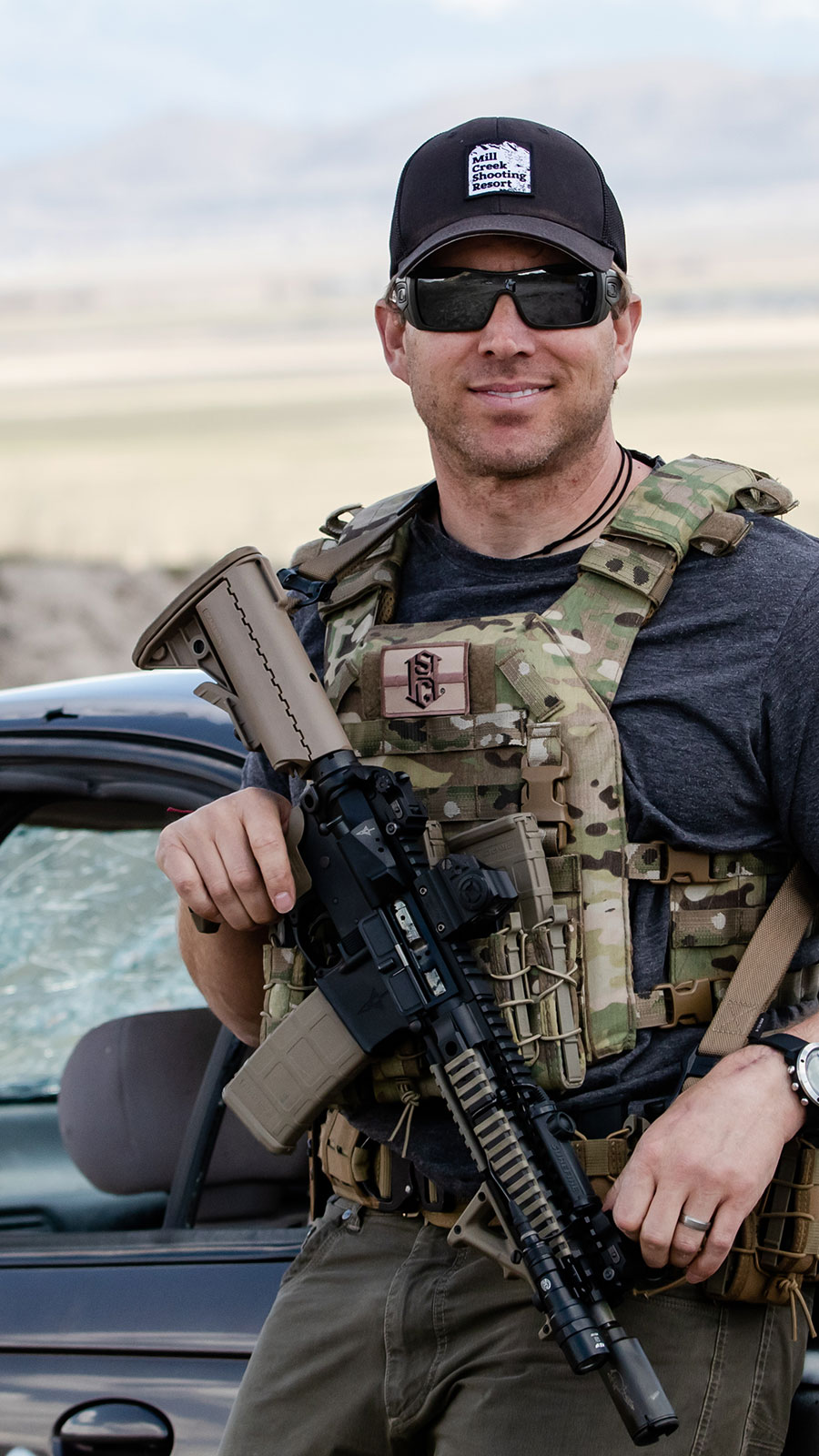
Mike Semanoff is the writer behind Shooter Opinions, sharing firsthand firearm and outdoor gear reviews, hunting experiences, range reports, and industry interviews. A U.S. Army veteran who served in the 82nd Airborne Division, Mike draws on military experience and time in the field to discuss performance, comfort, durability, and practical tradeoffs. His reviews combine personal observations with photos and videos of the gear in use. Some articles contain affiliate links; qualifying purchases may earn Shooter Opinions a commission.