

What gets lost when a suppressor is reduced to a weight, a decibel figure, or a durability claim? Mike Semanoff sits down with Mike Pappas and Gary Hughes of Dead Air Armament to discuss the tradeoffs behind those specifications. The conversation moves from sound testing and materials to first-round pop, consistency, and the industry’s expectations at the time.
This interview was originally published in November 2017. The summary below presents the guests’ views from that conversation. Product references and the closing legislative discussion are historical context, not current specifications or legal guidance.
Why the application changes the tradeoffs
Pappas and Hughes favor products designed around specific uses rather than expecting one design to excel everywhere. Their examples return to a common theme: the most impressive result on a single specification may not produce the most satisfactory overall experience. Sound character, weight, and durability can pull decisions in different directions.
Sound metering: location and conditions matter
A published decibel figure can look like a simple way to compare suppressors, but the measurement method changes what that figure tells you. In this part of the conversation, Mike Pappas and Gary Hughes of Dead Air Armament explain why they consider both muzzle measurements and the experience at the shooter’s ear.
The discussion begins by distinguishing sound near the muzzle from sound near the shooter. The guests describe muzzle measurements as a useful point of comparison, while explaining that measurements at the ear have a strong influence on their development priorities. A favorable result at one location does not automatically establish the result at the other.
Why results from different tests can differ
At 0:56, the conversation turns to variations in test setup. Pappas and Hughes mention measurement location, altitude, temperature, and humidity. They emphasize the value of repeatable results within their own testing rather than assuming every published number was obtained under equivalent conditions.
This is an important distinction when reading reviews: a difference between two reported numbers may reflect different circumstances as well as different products. The interview does not supply a controlled comparison that isolates each variable.
Why a single ranking is incomplete
At 2:17, the guests explain that a design can perform differently at the muzzle and at the ear. Their aim is a balance, rather than optimizing one figure in isolation.
- Where was the measurement taken?
- Were the conditions and equipment comparable?
- Were results repeatable?
- Does the report describe both the measured result and its limitations?
Balancing weight, strength, and sound
Can a suppressor be lighter, stronger, and quieter without a compromise? Mike Semanoff puts that marketing question to Mike Pappas and Gary Hughes. Their answer is that the intended use must come first: a reduction in weight has to be considered alongside durability expectations.
The guests distinguish the needs of someone prioritizing low weight from those of someone expecting demanding, repeated use. They do not dismiss lightweight products. Instead, they explain why a feature that is valuable for one application may be a poor basis for judging another.
That makes a weight figure useful, but incomplete. It tells you about mass, not everything about durability, sound, or the limits of the finished product.
What is being traded away?
Pappas and Hughes repeatedly return to the relationship between material, strength, and weight. The conversation is less about choosing a universal winner than about acknowledging what a design prioritizes. The guests describe light-duty and heavy-duty expectations as different requirements, even when advertising presents the products in similar terms.
How to read the claim
- Ask what use the product was designed for.
- Separate a measured weight from a broader durability claim.
- Look for stated limitations rather than assuming a short label covers every situation.
The interview provides an industry perspective on tradeoffs, not an independent comparison of current products. Its enduring value is the question it asks of any specification: what does this benefit cost elsewhere?
What a full-auto rating does—and does not—tell you
“Full-auto rated” sounds like a clear statement of toughness, but what information does the label actually provide? In this interview excerpt, Mike Pappas and Gary Hughes discuss the gap between a manufacturer’s durability claim, its testing, and its warranty.
The guests argue that the phrase alone does not reveal how a product was evaluated or what conditions its maker had in mind. They distinguish their own approach to testing from what they regard as loose use of the term in marketing. These are their observations about the industry, rather than findings from an independent survey of manufacturers.
Warranty coverage and durability are different
One of the sharper points in the conversation is that a promise to repair something is not the same as evidence that it will withstand every use. A warranty describes the maker’s response to a problem; durability describes how the product behaves before that problem occurs.
The distinction is useful well beyond the label in this video’s title. A short assurance can leave unanswered questions about limitations, test conditions, and what the manufacturer actually guarantees.
What readers can take from the discussion
- Treat a durability label as the start of a question, not the whole answer.
- Distinguish supporting test information from warranty language.
- Read the current manufacturer’s limitations for the specific product rather than transferring a claim across models.
This excerpt explains how the guests interpret an industry term. It is not an endorsement of automatic fire or a statement of compatibility for any particular setup.
Materials and their different roles
A material name can sound like a quality ranking, but Mike Pappas and Gary Hughes describe a more complicated picture. In this part of the conversation, they discuss why weight, temperature, durability, and the role of a component affect the choice of materials in a finished suppressor.
The guests discuss titanium, aluminum, steels, and high-temperature alloys as materials with different strengths and limitations. Their central point is that the material has to suit the job it is doing. A reputation for being light or tough is not enough to describe a complete product.
The same name does not imply the same result
Pappas and Hughes also emphasize that the amount and placement of material matter. Simply naming an alloy does not establish the durability of the finished item. They describe their own company’s choices as application-driven and acknowledge that different materials have legitimate roles.
For readers, this helps separate a specification from an outcome. A material label is one piece of the explanation; the design’s intended use and stated limits are also part of it.
A better way to interpret specifications
- Which component does the material description refer to?
- What property is being emphasized: low weight, durability, or temperature tolerance?
- What does the manufacturer say about the finished product’s limitations?
The interview offers a historical industry perspective, not a materials test or fabrication guide. Compare this discussion with the companion excerpt on weight and durability tradeoffs.
Point-of-impact change and repeatability
In this part of the conversation from Mike Semanoff’s 2017 Dead Air interview, the discussion separates two ideas that are often treated as the same: whether adding a suppressor changes point of impact, and whether that change is consistent.
One result does not describe every host
The interview explains that the result depends on the rifle-and-suppressor combination. Added weight and the characteristics of the host can affect what is observed. A report of little or no change on one rifle does not establish that every rifle will behave the same way.
That distinction makes broad “zero shift” claims difficult to interpret without context. The important questions in the conversation concern what was tested and whether the behavior repeated, rather than whether a single demonstration produced a particularly appealing result.
Consistency is a separate quality
The guest emphasizes repeatability as a meaningful characteristic. A consistent change and an unpredictable change are different outcomes, even if both are described loosely as a shift in point of impact.
This makes the clip useful as a way to understand product claims. It does not provide a universal prediction for a particular rifle or instructions for installing or modifying a suppressor. The observations belong to the original interview and are not an independent comparison of current products.
Interpreting claims about suppressor push
Suppressor push is the name used in this conversation for a small increase in measured bullet velocity associated with a suppressor. Mike Pappas and Gary Hughes discuss why that effect can be difficult to distinguish from ordinary variation.
The guests characterize the effect as minimal. Their emphasis is not on a performance gain but on the difficulty of interpreting it: a few observations may not show whether a difference comes from the effect being discussed or from the normal spread in ammunition performance.
They also point out that changing conditions can produce differences. That is why the discussion treats a small change cautiously rather than presenting it as a reliable advantage.
Why sample size matters
The conversation illustrates a general measurement problem. When the effect being investigated is small compared with the variation in the observations, a tiny sample can be misleading. The guests contrast a couple of readings with a larger body of evidence, without presenting this discussion as a controlled experiment.
The takeaway
This is a useful example of why an interesting technical claim should not automatically become a purchasing argument. Pappas and Hughes acknowledge the effect while putting its practical significance in perspective. The video supplies their interpretation, not a universal velocity prediction for a particular rifle or ammunition combination.
Why the first shot can sound different
Why can the first shot sound different from the ones that follow? In this part of the conversation, Mike Pappas and Gary Hughes explain the phenomenon commonly called first-round pop and why it varies between circumstances.
First-round pop refers to an initial report that is noticeably louder than subsequent shots. The guests discuss it particularly in relation to rimfire and centerfire handgun suppressors. They describe the first shot as occurring under different gas conditions from those that follow.
The explanation in the interview
Pappas connects the difference to oxygen initially present inside the suppressor and the resulting combustion conditions. After the first shot, those conditions change. His explanation focuses on why the initial sound can differ rather than treating every shot as an equivalent event.
The guests also note that the magnitude varies with the design and the circumstances. The discussion does not provide a universal number or an independent ranking of products.
Why it matters when discussing sound
A description of how a product sounds can miss an important detail if it does not distinguish the first shot from the rest. This excerpt adds that context to the broader interview’s warning against relying on a single sound figure.
For the related measurement discussion, see Sound Metering of Suppressors. These summaries describe the guests’ observations; neither is a hearing-safety assessment.
Common first-purchase assumptions
In this short excerpt, Mike Pappas and Gary Hughes discuss a common expectation among first-time suppressor buyers: that one product will be the ideal answer for every use. Their answer is a critique of that assumption, rather than a list of products to buy.
The guests argue that broad compatibility and suitability are different ideas. Something may cover several applications without being the preferred choice for each one. That distinction is the main reason they caution against treating a one-size-fits-all claim as a complete answer.
What they mean by “stamp regret”
Hughes uses the expression to describe disappointment after discovering that an item does not suit the role its owner actually cares about. The example illustrates a mismatch between expectations and use, rather than simply a difference in price or brand.
Both guests speak from their own experience as consumers and industry participants. Their remarks include personal preferences, which should be distinguished from an independent product comparison.
The broader lesson
The excerpt is useful as a discussion of how marketing can shape expectations. It encourages readers to recognize tradeoffs and question a universal promise. The full interview develops those ideas through conversations about weight, sound measurements, and durability.
The original conversation included references to the regulatory process and market conditions of 2017. Those references are historical, and this summary does not state current fees, waiting times, or purchase requirements.
How suppression works: the broad explanation
A suppressor changes the sound of a gunshot, but the familiar movie portrayal does little to explain what is happening. In this part of the conversation, Mike Pappas and Gary Hughes describe the broad physical idea behind reducing muzzle blast.
The guests focus on hot, pressurized gas entering the surrounding air. They describe the suppressor’s role in moderating that release, rather than making every source of sound disappear. Their explanation uses an everyday analogy involving heat and gas to make the idea easier to picture.
Muzzle blast is not the only sound
The conversation also acknowledges the sound associated with a supersonic projectile. That distinction helps explain why reducing muzzle blast does not mean a firearm becomes silent. Different sources of sound remain different parts of the overall experience.
What this discussion adds to the full interview
The other excerpts discuss measurements, materials, and marketing claims. This one supplies the broad conceptual background for those conversations. It describes the purpose of the device, without providing construction, installation, or modification instructions.
The explanation is an accessible industry discussion rather than a complete acoustics lesson. For a closer look at how reported sound figures are interpreted, see Sound Metering of Suppressors, and for the difference between the first shot and subsequent shots, see What Is First-Round Pop?
The Hearing Protection Act: a historical discussion
The guests expected a substantial increase in demand under the scenario presented. They anticipated that existing inventory could sell quickly and that production capacity would take time to catch up. These comments were forecasts made during the interview, not a report of events that had already happened.
Would a larger market mean more manufacturers?
Mike Semanoff asks whether easier market access would encourage additional companies to enter. Pappas and Hughes respond by discussing the difference between a low-price offering and a product supported by extensive research and development.
Their answer also explains how they viewed their own company: they describe product development and performance as priorities that shaped pricing. That is a statement of their business philosophy, not an independent ranking of manufacturers.
What the conversation reveals
The excerpt is a snapshot of industry sentiment around a proposed policy change. It shows how manufacturers were thinking about demand, production constraints, competition, and product positioning. Those are separate questions from the legal status of a proposal.
Readers revisiting the interview should keep the conditional language intact. The guests were answering “what if,” and this page does not treat their predictions as proof of a law’s passage or of subsequent market outcomes.
The full video preserves the back-and-forth behind these observations. The guests describe their own development priorities and experience; this interview is not an independent product test or a statement of current law.
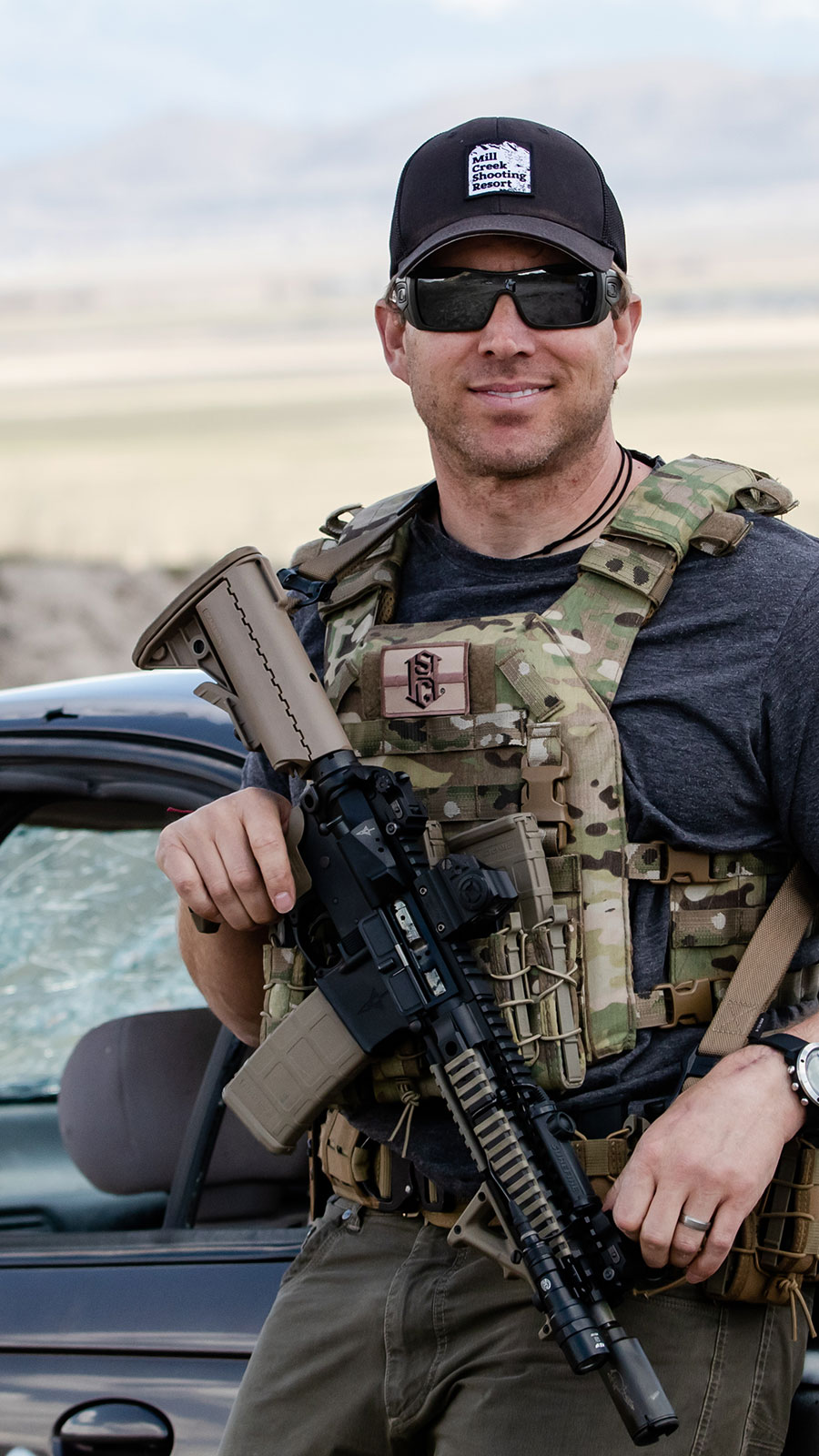
Mike Semanoff is the writer behind Shooter Opinions, sharing firsthand firearm and outdoor gear reviews, hunting experiences, range reports, and industry interviews. A U.S. Army veteran who served in the 82nd Airborne Division, Mike draws on military experience and time in the field to discuss performance, comfort, durability, and practical tradeoffs. His reviews combine personal observations with photos and videos of the gear in use. Some articles contain affiliate links; qualifying purchases may earn Shooter Opinions a commission.